Thursday, December 17, 2015

Rangitoto Island: The resilience of nature

by Eddee Daniel

This story from my trip to New Zealand was first published by the Center for Humans & Nature on Dec. 7, 2015. 


The low, wide mass of the volcanic island rises with uncanny symmetry from the choppy gray-green waters of Hauraki Gulf, its profile of olive-toned foliage unbroken by any hint of human presence. To my willing imagination it evokes archetypal cinematic jungle islands—hints of Moreau, King Kong, Jurassic Park—and I am eager to reach it and explore.

I had only two days in Auckland, New Zealand’s largest city and, as is my habit, I wanted to experience as authentic an urban wilderness as possible. I’d turned to local sources for advice about potential locations. Rangitoto Island was the singular, universal recommendation.

I had no inkling I would discover a place so primordial that it would challenge my deep-rooted notions of wilderness.


The gleaming towers of Auckland’s skyline quickly diminish behind us, along with several enormous container ships, innumerable sailboats and other pleasure craft. Our ferry leaves Waitematā Harbor—and civilization—behind. The catamaran’s twin bows slice smoothly through the heavier surf of the gulf. After a short cruise, a dozen or so passengers are delivered to the island’s ferry terminal, a bare concrete wharf.

As we prepare to disembark, a crackling mechanical voice ominously blares from the loudspeakers: “The last return ferry will leave promptly at 3:30. If you miss it you will have a very long, cold night on Rangitoto Island.” As if to drive home the warning, brisk gusts of salty spray strafe the wharf as we approach the shore. I button up my jacket.

We are greeted by the sharply beaked carving of a kaka (parrot), flanked by stylized visages of Tangaroa, the god of the sea, and Tāne Mahuta, god of the forest. In 2014 the Conservation Ministry commissioned this waharoa, or traditional gateway, dedicated to Peretu, the spiritual ancestor of Rangitoto. Beyond welcoming visitors to the island, the waharoa recognizes Maori cultural heritage and symbolizes a pact of co-governance of the island sanctuary. (Imagine the U. S. National Park Service agreeing to co-govern Great Smoky National Park with the Cherokee Nation.)


The small crowd quickly disperses. I walk along the shore path, marveling at swirls of lava that reach straight into the clear water. Though encrusted at the tide line with shells and seaweed, the exposed rock appears perfectly fresh, as if its molten flow may have solidified moments ago. Rangitoto is in fact the newest among 48 volcanoes that make up the Auckland volcanic field, having emerged from the sea a mere 6,000 years ago—though it hasn’t erupted for the last 550 years. *


Mangroves have gained a foothold along sections of the rocky coast. After a brief detour on a boardwalk through a mangrove thicket, I head uphill on the aptly named Summit Trail. Said summit is visible at what appears to be a great distance. Cumulous clouds boil over it. The feeling of entering a primeval jungle returns as impenetrable tangles of tree limbs and brush crowd the narrow path.


Periodically, the dense forest opens onto barren and forbidding fields of loose volcanic scoria. Blackened, basaltic lava, unstable and abrasive, is strewn everywhere in jagged chunks, like clinkers spewed from a fiery forge. A few tentative steps out onto it—seeking a vantage point for a photo—cures me of the impulse. That anything at all can grow from such a desolate wasteland seems miraculous. Then I plunge into the next patch of jungle.


Technically, this isn’t a jungle, since I’m not in the tropics. I am surrounded, however, by a profusion of, to me, alien and vaguely threatening trees and shrubbery. Locals likely would find it comfortingly familiar. Rangitoto, which receives over 100,000 visitors a year, is cherished as a “pest-free” wildlife sanctuary where native species can flourish.


Numerous conspicuous traps indicate both the fragility of the “pest-free” designation and the vigilance required to maintain it.

The island is home to the world’s largest forest of pohutukawa trees, an iconic New Zealand species whose tufts of crimson blossoms have lent it the nickname “Antipodean holly.” Although it is spring here in the Antipodes, sadly, I won’t be seeing any of the unusual flowers, which bloom later in the season. Its abundance on Rangitoto can be attributed to the pristine quality of the island and to the pohutukawa’s ability to survive in exactly these rocky, otherwise inhospitable conditions.

The trail steepens. The clouds part; sun blazes onto black, burnt earth. I remove my jacket, slow my pace, guzzle water from bottle that suddenly seems too small. The summit, though closer, appears far higher than before.

I catch myself reconsidering “urban wilderness,” the trope I’ve so carefully honed over the years. Here on Rangitoto I am betrayed by my casually generous interpretation. When our species was young there was no wilderness. The world was simply where we lived, where we learned to survive. Later, when we settled in cities, wilderness became something “other”—and fearsome. Here I find that wilderness: a rupture in the civilized world. This place would be wholly uninviting, possibly lethal, had not convict labor a century ago pummeled lava into a manageable path for day-trippers like me.

Rangitoto was born in violence.

A Maori story tells of the tupua, children of the fire gods Auahitūroa and Mahuika, who quarreled and cursed Mahuika. As punishment Mahuika enlisted Mataoho, the god of earthquakes and volcanoes, who destroyed their mountain home and raised Rangitoto from the sea.

When mist surrounds the island, it is said to be the tears of the tupua weeping over their lost home.


And what about us? We have cast away the old gods, consigned them to quaint totems. We believe in science: volcanology and plate tectonics. We believe—or willfully choose not to believe—in global warming. Are we faring better than children who quarrel and curse their mother?

As I climb the ever-steeper but now deeply forested trail I imagine the tupua wandering the brutal terrain before anything had sprouted from the sulphurous ground. Just below the summit a boardwalk has been built overlooking the dormant crater. The canopy in the completely forested bowl looks lush and benign.


This is how the Earth renews itself. Like the volcano, the Earth was born in violence. Whether our species is responsible for climate change or not, ultimately it is we, not the Earth at large, that will suffer the consequences.

Wooden steps lead me to the summit where another raised boardwalk provides panoramic views of the entire island, surrounding gulf and distant mainland. From here the thickly forested island looks like a hoop skirt splayed out upon the surface of the water, decorated in radiating patterns of green forest canopy and black fingers of exposed lava. Again I am struck by the complete absence of any noticeable trappings of civilization—no roads, rooftops, power lines, towers; nothing that suggests we humans have been here at all.


Except, of course, here I am. On a boardwalk built for my recreation and comfort at the crown of this wondrous, immaculate, and hostile landscape. And there, across the sun-dappled waters of the gulf, are the skyscrapers and sprawling environs of Auckland. Sunlight streaming through intermittent clouds briefly spotlights the sparkling white city before it falls again into shadow.

Rangitoto…and Kilauea, Cotopaxi, Mount St. Helens, Pinatubo, Krakatoa and Eyjafjallajokull. And, of course, Vesuvius. No argument is more convincing. Though it might take thousands of years, the Earth will heal. I swallow the last of my water and take a final turn to admire the 360° view of Rangitoto, a serene, pest-free sanctuary.

How would it shape our awareness, I wonder, if every city had a volcano on its doorstep? Taking leave of the summit I descend the steps; I plunge back into the misty pohutukawa forest.


*Sources vary regarding the date of first eruption. Some give 6,000 years while others drop a 0, making it only 600. There seems to be no dispute, however, that the last eruption was no later than 550 years ago.

To see more photos from New Zealand, go to Eddee’s flickr album.

Monday, December 14, 2015

Menomonee River restoration: a photo essay

by Eddee Daniel


I'd been told over a year ago that a series of five "fish barriers" --aka dams of various sorts and sizes--were going to be removed this year. I've been looking forward to it ever since. With the year rapidly drawing to a close, the work is finally underway. I didn't notice what was happening until I happened to see this big excavator in the river last week. By then most of the work had been done. But I have some before and after photos of the sites to share.


I caught up with the project as the fourth of these impediments to fish passage was being cleaned up. This one had been an abandoned sanitary sewer. Broken pieces of the pipe can be seen (above) piled up in the park for removal.


For decades, while the disused pipe was in the river, it created a short dam with a pool sufficiently deep to attract local kids. This shot (above) was taken a couple of summers ago. Unfortunately, the damming effect was also enough to inhibit the passage of fish and plans to remove all 5 have been in the works for quite a while. As a former board member of Milwaukee Riverkeeper and a nearby resident, I've long anticipated the restoration of the Menomonee.


Today the dam, the pipes and the pool are all gone. Sadly, the tree from which the kids strung their rope swing was also removed to facilitate the project.


In fact a whole swath of trees were removed in order to reach the river. This site is near the intersection of Charles Hart Parkway with the Menomonee River Parkway.


The sewer that went across the river continued on through the woods on the south side. There were at least three--what do we call them now? Manholes was how they used to be described. Anyway, there were three sticking up in the middle of the woods for no good reason. In order to remove them, though, another great swath of trees had to be obliterated. Now what was a narrow mountain biking trail looks like a broad logging road.


Upstream, just east of the Hoyt Park pedestrian suspension bridge was another low dam, seen here in a shot from two winters ago. The bridge is visible in the background.


Today the site looks like this. White limestone has been strewn to create a more natural flow that fish can navigate easily. The MMSD, which is responsible for the project, informs me that the sewer line in this spot is still in place, just covered with the stones. In time it will actually look natural, too!


If you've ever visit Hoyt Pool or the playground next to it and walked down to the river you probably saw this. At some point in its history it was safe to walk across, presumably. It clearly was a walkway, with stairs leading down to in on both sides of the river. The fact that it looks completely dry in this photo from last year was due to extremely low water during a drought. During normal flow levels there was always a waterfall going over the top.


Here is essentially the same view today.


Here is another before and after comparison. Before is above, after removal is below.


Don't ask me why they didn't remove the stairs. Seems like a safety hazard to me. But the fish can swim upstream now.


Just west, still near the playground where my two children played and now I take my granddaughter, was this prodigious dam-like sewer crossing. Again I shot it in 2014 during the drought. I'd never seen it dry before.


Here's the view of it from the north bank.


Now it's gone.


And behold! There are actual rapids where before there was a pool.


Removal of the fifth and final dam is still underway as I write this. It is the largest one. In low water conditions I could easily walk across in my sandals without getting my pants wet. This photo was taken from the south bank just a couple weeks ago after a heavy rain.


This is the same viewpoint last week as workers place fabric over limestone fill in order to stablize the badly eroded bank.


The concrete, which I've heard once carried a bridge of some sort, is wide enough for this front end loader to drive across. It's carrying a clay and topsoil mixture that will cover up the rock and the fabric lining.


Here's the same scene viewed from the north bank a couple days later. The shovel is tamping down the earth on top of the fill.

Rain has halted the project for the moment. But before too long this last Hoyt Park fish barrier will have been removed. Then the Menomonee River will be that much closer to being swimmable and fishable, one of the goals of Milwaukee Riverkeeper. In this case, at least it will be more swimmable by the fish.


Thursday, December 10, 2015

Season's Greetings!

From the Lynden Sculpture Garden
2015 Artist in Residence

Sculpture: Salem 7, 1967, by Antoni Milkowski

May Peace settle like snow around you

and the Earth grow calm


I have had the privilege of serving as Artist in Residence at the Lynden Sculpture Garden this year. I am grateful to the staff there with whom I have worked. I've enjoyed meeting many other artists, some also in residence, some exhibiting, some leading workshops and others passing through. Most of all I have enjoyed the beauty and serenity of the place.

The mission of the Lynden Sculpture Garden is to promote the enjoyment, understanding, and appreciation of art and the environment. Public programming focuses on the intersection of art and nature. The setting integrates the Lynden’s collection of monumental outdoor sculpture with the natural ecology of the landscape.

The Residency Program is designed to enable artists to immerse themselves in Lynden’s sculpture collection, its landscape and the surrounding community. The residency program invites local artists to engage with the Lynden over a period of time, mostly commonly across four seasons.

To learn more about the 2015 residency and find links to many more images from the year go to the Lynden Sculpture Garden project page of my website.

Sunday, December 6, 2015

City Creatures: adventures in Chicago's urban wilderness


City Creatures: Animal Encounters in the Chicago Wilderness is a lovely new book published by the Center for Humans & Nature. The book consists of essays, stories, poetry and art and it is very much in the spirit of urban wilderness. I went to a reading today by co-editor Gavin Van Horn, Director of Conservation for the Center for Humans & Nature.


The reading was held at the Hal Tyrrell Trailside Museum of Natural History in Thatcher's Woods, River Forest, IL. Thatcher's Woods, which straddles the Des Plaines River, is part of the Forest Preserve system of Cook County.


I took advantage of the beautiful day to get to there early enough for a walk in the woods before the presentation.


The pond behind the museum was at flood stage following recent rains.


The leafless trees and swampy conditions made it easy to imagine wilderness today. But the sunshine was bright and cheerful and there were plenty of folks out enjoying it.

Des Plaines River.


The museum is barely visible through the trees.


Yes,  it's an urban wilderness.


I've forgotten his name, but the red-tail hawk lives at the Trailside Museum, along with a coyote, a couple owls, snakes and turtles. This poor guy was rescued, having lost one of his eyes.

A wonderful photo of another hawk graces the cover of City Creatures. I recommend it. If you're interested, check it out at the Center for Humans & Nature website.

There is also a City Creatures blog and--full disclosure--my work has been published on it.

Thursday, December 3, 2015

Hoyt Park: the trees lose again

Anyone who has driven anywhere along the Menomonee River Parkway in the past several months knows that it's being reconstructed a little at a time. Most of it is pretty much completed by now, except for one last stretch along Hoyt Park (where I happen to live!) One small component of the large project is the rehabilitation of the Hoyt Park pedestrian suspension bridge, which connects the park proper with Hoyt Park Pool. It will be a great relief to see those sadly needed repairs.


However, there's always a catch, isn't there? So often the catch is tree removal. And so it is with the bridge. I happened to be driving by yesterday and saw a crew lopping off limbs over the bridge. They were back again to day clearing more trees on the other side of the river.


Wednesday, November 25, 2015

Happy Thanksgiving!

May your Thanksgiving be full of joy and companionship!


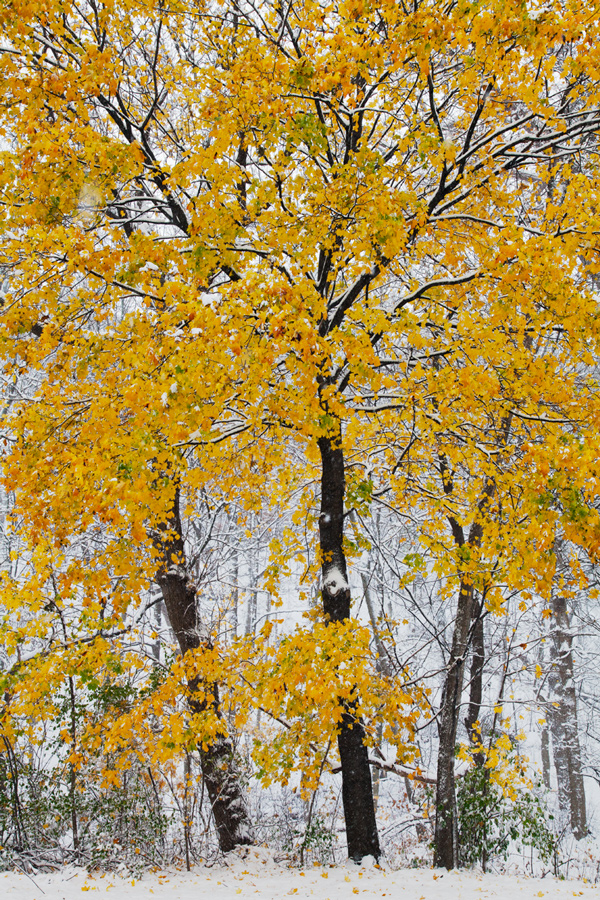
This cheery wintry/autumn scene is from Jacobus Park in Wauwatosa. The snow fell heavily on Saturday. While it was beautiful, I for one am thankful that the snow has largely melted and Thanksgiving Day tomorrow is expected to be milder yet.

Wednesday, November 11, 2015

Eschweilers to come down as Echelons rise: Photo essay

Followers of the Milwaukee County Grounds likely have already heard the sad news: At least two of the four historic Eschweiler buildings are to be "partially" demolished. The Mandel Group, which is in the midst of constructing their Echelon apartment complex in a ring around the site, has plans for all four. The former Administration building is to remain as a centerpiece to the Echelon development. The small engineering building may be converted into a single family home. The dormitory and dairy buildings are to be demolished down to the first floor. The remnants are to be re-purposed as "walled gardens."

There's more to the story, which was covered nicely and very thoroughly Striking An Imperfect Balance: Development, The Eschweilers & Monarch Butterflies .

I thought I'd add a few visuals to the story, so I went out yesterday and walked around the entire site to document the current situation:


The Eschweiler Administration building (left), which is to remain, and the northernmost apartment building under construction. View from Discovery Parkway.


The dairy building (background) has had its roof tiles removed. The interior is being gutted prior to deconstruction. The Administration building is on the right. New windows and roof tiles have already been installed.


The apartment building in the northwest corner of the site was the first to get underway and is the furthest along. View from the Monarch Trail.


Workers constructing one of the Echelon buildings (foreground) while other workers remove roof tiles from the Eschweiler dormitory building (background).


View looking southeast from the Monarch Trail of the Echelon complex (left) and the ABB building (right).


View looking northeast from the Monarch Trail of the Echelon complex.


Milkweed pod spreading its seeds on the Monarch Trail.

To see more photos of the County Grounds, go to my Flickr album

The Friends of the Monarch Trail and followers of the County Grounds have their eyes on another issue. The section of the grounds known as the east woods, which is located north of the power plant and Ronald McDonald House (see map below), has long been an area of concern as the last remaining segment that may or may not be preserved. I've written about it before, but there will be more to come.