Showing posts with label preserve. Show all posts

Monday, May 21, 2018

Hiking Hartland Marsh and the Ice Age Trail


The Bark River

Spring was still trying to catch up from our unseasonably cold April last week. But this day dawned brightly and suddenly turned unseasonably hot. Shedding jackets, a dozen or so of us gathered at the Cottonwood Wayside for a hike into Hartland Marsh led by Jeff Romagna, a volunteer with the Ice Age Trail Alliance.


Hartland Marsh Preserve is nestled between the Lake Country Industrial Park and the Gleason Commerce Center in Hartland. Its 180 acres is protected by the Waukesha County Land Conservancy in partnership with the Ice Age Trail Alliance and the Village of Hartland. The Bark River meanders through the middle of it, somewhere out where we couldn’t see it from the Wayside.

Our tour began on a mulched path, known as the John Muir Overlook, through a hardwood forest featuring ancient bur oaks. The trail narrowed, then led to a boardwalk across the marsh and over a small wooded island. 

Birds were plentiful, it being migration season. This is a rose-breasted grosbeak.

Another boardwalk looped through last year’s cattails and back to the forest. Here the trail was hemmed in with thickets of buckthorn. 

Most of the preserve has a far more open understory and the difference was striking. Jeff, our guide, introduced us to Paul Mozina, known as The Buckthorn Man, whose volunteer efforts have been largely responsible for removing this particularly obnoxious invasive species. Along with being more aesthetically pleasing to hike through, the cleared portions enable a more robust diversity of native species to flourish.


Across an open field we watched as a pair of sandhill cranes shepherded two chicks away from us towards a pond.

A side trail led us through a beautiful glade, over a hill and across the Bark River on a footbridge to another small island. Paul pointed out the many natural springs around the two hills that had led to its being a homestead, now vanished.

Four more sandhill cranes watched us warily from the marsh, their colors a nearly perfect match with the dead cattails. Can you spot all four?


According to the Ice Age Trail Alliance, wetland preserves like this are becoming more and more important as land is developed and urbanized. Wetlands serve critical ecological functions that help maintain environmental health as well as sustaining wildlife habitats.

Hickory sapling in bloom
By absorbing rainwater and nutrients, a marsh helps reduce flooding, prevents shoreline erosion along waterways, recharges groundwater, and enhances water quality.

Preserves like this one also provide opportunities for recreation, research and education, serving as both a laboratory and outdoor classroom for students and teachers.

The John Muir Overlook is a 1¼-mile loop linked (across Cottonwood Avenue) to the Hartland segment of the National Ice Age Scenic Trail. We hiked east along a portion of the trail until we reached the Aldo Leopold Overlook. The 45-foot tall glacial hill—which could be an esker or a moraine, according to Jeff—gave us views of the surrounding marsh. As we turned to go, a pair of brilliant white egrets sailed in to land on an open pond.

Tree huggers! It took three to reach around this enormous oak.


Friday, March 2, 2018

Hartland Marsh Preserve

-->
Located off Highway 83 in the Village of Hartland, Hartland Marsh Preserve spreads across 180 acres protected by the Waukesha County Land Conservancy in partnership with the Ice Age Trail Alliance and the Village of Hartland. The Bark River meanders through the preserve. Ranked as a Class 1 Wildlife Habitat by the Southeastern Wisconsin Regional Planning Commission, the preserve protects ancient bur oaks and a vital habitat for birds and various woodland animals, including mink and turtles.

I discovered the preserve recently in my efforts to explore new wild lands in Southeastern Wisconsin as part of the project, A Wealth of Nature, that I'm working on with Preserve Our Parks. The goal of the project is to bring awareness to the wealth of opportunities there are in our vicinity for the enjoyment of nature. Stay tuned for the launch of a new website and much more.


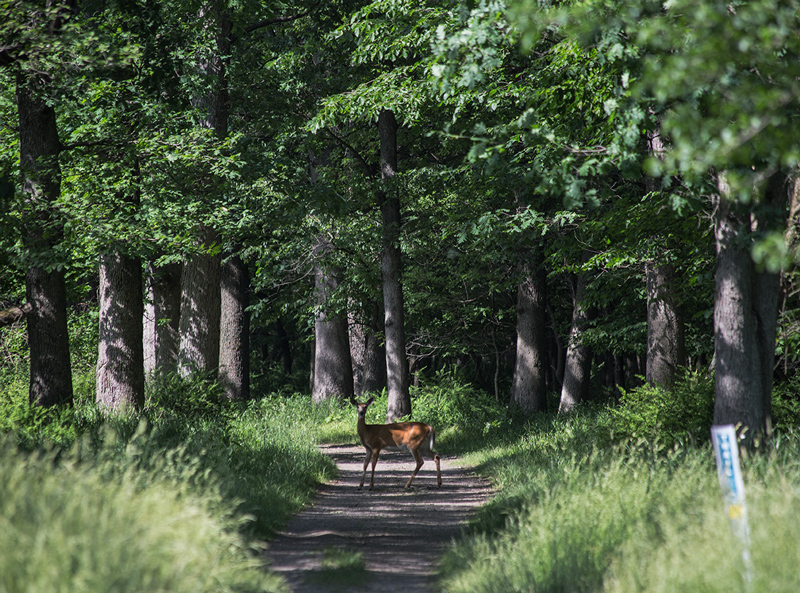
The day I went to Hartland Marsh was warm, almost spring-like except for the overcast and still-thawing ice. I saw no one else the whole time I walked in an around the looping trail, but then said trail was sheer ice and extremely treacherous, so it wasn't too surprising. I managed to get a few nice shots of the wintry but snow-less scenery.


Wednesday, December 6, 2017

Kratzsch Conservancy in Washington County is a treat

-->

Scheduling a tour outdoors in early December can be risky. Cold rain had been in the forecast. But our recent string of unseasonably warm days held through the weekend and on Saturday morning, bright sun lit the colorless landscape like a torch. It turned out to be a perfect day to tour Kratzsch Conservancy, a 73-acre preserve located near Newburg in Washington County.

Our guide was wildlife biologist Ryan Wallin, Stewardship Director for the Ozaukee Washington Land Trust (OWLT), which owns and manages the site.  Wallin considers himself fortunate. Not only did he recently land his current position, which enabled him to move back home to Wisconsin from a stint in distant Washington state, but he also gets to live in this beautiful place. The historic Kratzsch family farmstead has been turned into a private, live-in headquarters for the OWLT stewardship program.

We hiked the circuitous 2-mile trail system that looped through a surprising variety of undulating glacial terrains. The property contains 14 acres of wetlands, 24 acres of forests and 37 acres of grasslands. Wallin explained that the trails are being managed in a way that tries to balance the needs of wildlife with the expectations of human visitors. For example, trails are designed to circumscribe open areas because cutting a trail through the middle of a prairie would degrade it as a habitat for certain species, particularly ground-nesting birds. Trails, it turns out, also are used by carnivores as well as humans!


As recently as 2012 much of the property was still being farmed. Those sections that are currently forested were mostly wooded pastures for grazing livestock. A few mature oaks are all that remains of the historic forest. OWLT has planted hundreds of new trees, including paper birch, white oak, red oak, burr oak, sugar maple, white ash and black cherry.


The grasslands are likewise newly planted with prairie grasses, along with some trees. Wallin explained that the whole area once was forested and most will be allowed to follow a natural succession process that will gradually replace the grasses with woodlands.

We passed by a very solidly built hunting blind that overlooks one of the prairies. It is raised high enough for visibility but not so high that it can’t be accessed via a ramp. Not being a hunter myself—or disabled—it had never before occurred to me that there might be a need for an accessible blind. The ADA compliant blind was built in 2014, Wallin said, and sees moderate use.

Kratzsch Conservancy has 2,500 feet of frontage along the east/west branch of Milwaukee River and can be accessed from the water by kayak and canoe. It is strategically situated along an environmental corridor among other protected properties in order to increase connectivity and enhance wildlife habitats. 

Goldenrod gone to seed


Saturday, June 24, 2017

“Treasures of OZ” celebrates nature in Ozaukee County

Queen's Lady's Slippers, Cedarburg Bog State Natural Area
One of the highlights on a daylong tour of Ozaukee County parks was this patch of Queen’s Lady’s Slipper blossoms. The rare orchid, also known as “Showy” Lady’s Slipper for obvious reasons, has disappeared from much of its former range because its preferred soggy habitat has also largely disappeared. But there it was, almost within arm’s length, next to the narrow boardwalk that allowed me to walk into Cedarburg Bog—prime orchid habitat.

Cedarburg Bog State Natural Area

Like the flower, the opportunity to enter the boardwalk at the Cedarburg Bog State Natural Area between Saukville and West Bend is also rare. Operated for research and educational purposes as a U.W.—Milwaukee Field Station, access is usually restricted. But as one of the “Treasures’ of OZ” the bog is part of an annual celebration of parks, preserves and natural areas in Ozaukee County.

Cedarburg Bog State Natural Area
I was delighted. Although I’d been to the research station before I’d never been out into the actual bog. The boardwalk led through thickets and across a large pond covered in lily pads fringed with cattails. The trail continued on over a couple of islands of solid ground before the boardwalk resumed and plunged into the heart of the bog. Several species of native Wisconsin orchids more diminutive than the Lady’s Slippers appeared here and there.

Pitcher Plant, Cedarburg Bog State Natural Area
Most exotic to me, however, were the pitcher plants, which grew out of the waterlogged earth in abundance. The carnivorous plants were in bloom, which was new to me. The blossoms, past prime, had lost their drooping petals, leaving behind a flower head that resembled an alien satellite dish. Brightly colored blossoms of many species speckled a landscape dominated by tangled knots of stunted tamaracks. The boardwalk and the special event made it possible to visit an otherwise impenetrable wilderness.

Tiger Swallowtail Butterfly, Ehlers County Park

More than a clever marketing phrase, “Treasures of OZ” was billed as an Eco-tour and Science Expo. The “expo” parts of the tour featured a wide variety of interesting activities involving wildlife, science displays, food vendors, music and a raffle. But clearly the real treasures of OZ are the natural havens themselves.

Milwaukee River, Ehlers County Park
In addition to Cedarburg Bog this year’s tour included two county parks, a popular state park, and two preserves managed by the Ozaukee Washington Land Trust. Being familiar with them already, I skipped Harrington Beach State Park and Spirit Lake Nature Preserve. (Coincidentally, I included Spirit Lake in my recent story about five “hidden gems” of Milwaukee area parks.)

Ehlers County Park
Ehlers County Park is a narrow strip of riparian land along the Milwaukee River two miles north of Saukville on Highway W. It boasts a prairie awash in wildflowers as well as 2,200 feet of shoreline. Scientists with the Ozaukee County Fish Passage Program and Milwaukee Riverkeeper were on hand for the tour to demonstrate the diversity of fish and macro-invertebrates in the Milwaukee River.


Kelly Ostrenga, with Milwaukee Riverkeeper, holds a rusty crayfish, an example of a macro-invertebrate.

Tendick Nature County Park
As I would learn belatedly, Tendick Nature County Park has two segments. Since I foolishly neglected to consult either the Treasures of OZ website or a map, I turned in at the first segment I reached as I drove north on Highway O from Saukville.

Tendick Nature County Park
Surprised to find no one there, I nevertheless enjoyed the prairie and magnificent clouds before heading back south without discovering the second, larger and more popular segment. Sometimes you find what you’re looking for…

Tendick Nature County Park
…but if you remain alert you will discover what is all around you.

Snapping Turtle, Forest Beach Migratory Preserve

My final stop of the day was Forest Beach Migratory Preserve, the epicenter of the Eco-tour and Science Expo. Randy Hetzel, a genial and loquacious naturalist with a traveling wildlife collection, thrilled a rapt crowd with a menagerie that included snakes, frogs and turtles. Having experienced their ferocity in the wild, I was particularly amazed to see how casually he and his teenage daughter handled a huge snapping turtle.

Buckeye Butterfly, Forest Beach Migratory Preserve
Forest Beach is home to the Western Great Lakes Bird and Bat Observatory. Its mission is to study bird and bat populations and promote their conservation throughout the Western Great Lakes region. After stopping indoors briefly to inspect the exhibits, I headed out to explore the trails. I didn’t notice many birds—migration season has passed—and it was too early in the day for bats. What I did see in astonishing abundance were a wide variety of butterflies.

Forest Beach Migratory Preserve
I had heard that the 116-acre preserve had once been a golf course. As I wandered through the wildflowers with butterflies fluttering all around me it was hard to imagine fairways and greens. The thunderstorms that had been predicted never materialized but a turbulent sky rose over a landscape that remained serene and entrancing. We humans have little in common with orchids but like those delicate and sensitive flowers we require a certain measure of nature in our lives. I know I do. And I feel fortunate to live near enough to enjoy these treasured places.

Monarch Butterfly
You can see more photos and additional treasures of Ozaukee County on Flickr.

Wednesday, June 21, 2017

Seymour Simon Preserve: Encounters in the Chicago Wilderness


On a Sunday afternoon recently I drove down from Milwaukee to pick up my wife at O’Hare. Her flight was due to arrive in the late afternoon when traffic tends to pile up as travelers return to Chicago from their weekend in Wisconsin. I’ve been in this position before. I like to avoid potential backups on the Interstate by going early and taking the time to stroll in one of the Forest Preserves along the Des Plaines River near the airport.

I happened upon a sign for the Seymour Simon Preserve and pulled into the nearly full parking lot next to a large open field. Large groups of people were using the shelters provided there. I found the Des Plaines River Trail and headed south along the river. Maybe it was the heat—somewhere between 80 and 90, depending on whether you were in shade or sun—but the trail was uncharacteristically busy that day. So was the river itself. I saw canoers and kayakers going upstream and down.

Here is a short photo essay from my stroll that afternoon. As you will see, wildlife is represented, but most of my encounters were of the human variety.