As we arrived at the cottage thunderheads rolled over the
tree line and out across the vast expanse of Lake Michigan. I rushed down onto
the narrow beach. Bright sunlight danced with shadows as the broken edge of the
storm swiftly gathered itself into a solid overcast sky that poured down
torrents of rain. I am not a great believer in coincidence. On the other hand,
I am acutely sensitive to nature’s moods and when they resonate with my own
emotions I welcome the symbiosis.
After several months in a nursing home, my mother suddenly
took a turn for the worse. She was admitted to the emergency room in Venice,
Florida, near where she had lived for the last 23 years. The next day, before I
could book a flight, she died.

Death does not respect anyone’s schedule. There is no
convenient time to learn that one’s mother has died. As it happened, after I
learned of her death I found myself in a rental cabin on Lake Michigan, staring
at the horizon every day for a week. When death chooses to occupy your mind the
horizon – that paradoxically finite edge of infinity – can be a hard line on
which to rest your gaze. Or it can be a comforting one.
Death can appear immediate and unequivocal or one singular moment
in an endless cycle of regenerative life; it can feel excruciating and
irremediable, or it can bring peace and enduring comfort.
What follows is a meditation inspired not by a contemplation
of that horizon, but by a walk near a river, through a forest and a prairie
meadow. These are all among the features that can be found in the urban
wilderness of Maywood Environmental Park, in Sheboygan, WI.
Dawn
In memoriam, Polly (Daniel)
Kempes, 1925 – 2012
I awake before dawn, suddenly alert in unfamiliar darkness,
as if to keep an appointment I hadn’t made, but one I can no longer postpone.
During the night it had rained – a hard thunderous downpour.

Last week’s newspapers still lie in the smug, neatly bundled
heap where I had put them with such good intentions. Before I heard the news.

Alone, I go to the river. A hoary mist rises out of
unfathomably black water. The riverbank bristles with grasses and sedge tousled
by the night storm, heavily laden with morning dew, but perfumed with the
fresh, damp sweetness of wild indigo, jewel-weed, wild cucumber.
From an unseen place in the misty shadows a great blue heron
appears, silent and majestic, like the spirit of night. Its dark, angular form
rises awkwardly, then sails with effortless solemnity into the brightening
east.

I did not choose to love the river any more than I choose to
breathe each breath. My love of nature was perhaps her greatest gift to me at
that moment of youth upon which all else turns. She loved me and she let me go;
she gave me freedom to wander, to linger at the river, to hear to the morning song
of lark and sparrow – to learn to love in turn what is wild and free.
A doe looks up from the riverbank to stare at me, hesitant,
expectant; then steps, unhurried but resolute, into the deeper darkness of the
wood. Her three dappled fawns I had failed to see follow, softly stepping in
line as if tethered together.
I disturb a brood of wild turkeys on the path. The young
ones scatter at my approach, melting into the underbrush, while two hens strut
protectively behind. Then they too disappear.
In the gradually lessening gloom a muskrat stirs from the
security of overhanging grass, glides across the smooth surface of the water
until it becomes indistinguishable from the river itself.
Those who are so inclined may see these fleeting encounters with
wild creatures as omens, but they are not apparitions; they manifest our desire
to heal the world and ourselves.

The wide, accommodating path I’ve been walking ends
abruptly, with no sign or warning. The carcass of a crow rests on the verge,
inert but peaceful, its feathers black and glistening. Its cold blue eye
reflects a glimmer of the dawning sky.
I press on as if I have no choice, plunge into an unknown
forest, as if no one has preceded me; a pioneer in a wilderness of tangled,
dew-drenched brush, a wilderness of tear-stained, tangled emotions – as if no
one else has ever lost a mother.

Rays of rising sun cut through the misty forest like golden
swords. I emerge from a thicket into open prairie aflame with goldenrod,
bejeweled with dew. The three fawns – untethered now, motherless – stare in
fearless astonishment at my presence.
A mother’s love is the one debt that we can never repay. The
best we can do is to love the world, to hold it in close embrace, as we hold
our own children until the day comes when, like the fawns, they too sally out
of the forest on their own into the blazing sun of a dawning day.

Here in a sunlit meadow is how I forgive myself for the
thousand little deaths denied each time we said goodbye, each day we lived in
our separate cities a thousand miles apart. I come to claim my true
inheritance, to reap such joy as she sowed in me, to live with the knowledge
that all rivers flow to an unbroken ocean.
The clean, sharp lines of three Sandhill cranes cleave the
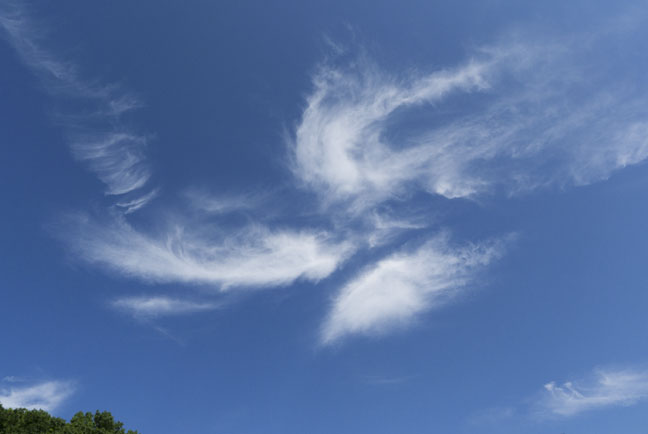
sky like a single blade. A few lingering storm clouds dissipate, vaporize. The
sun rises into a sky so cleansed that my moist eyes ache in wonder at its
blueness.

This is how I want to remember her; to reawaken after the
storm in the night, to greet the glorious new day, to go on living my
purposeful and reckless life, to love the world as I have been loved.