Showing posts with label richard louv. Show all posts

Monday, August 1, 2011

Meditations on the Milwaukee River Greenway


Twelve kayaks put in below the dam in Kletsch Park in Glendale. The rain-swollen river pours over the dam like water from a tipped bucket that never empties.  Our progress is swift. Without lifting a paddle we can drift and daydream. Welcome to my daydream.

Richard Louv suggests that technology and nature are not incompatible, but “the more high-tech our lives become, the more nature we need to achieve a natural balance.” I’ve left my cell phone behind, but not my camera. To each their own technologies. Balance, too, is up to each of us.

There are few places on earth with an abundance of fresh water. The danger of abundance is a tendency to take the resource for granted; perhaps to fail to protect it. Milwaukee, part of the Great Lakes watershed, is particularly fortunate. Drifting, my mind fills with the grace of abundance.

It is Friday, a workday; lawn chairs poised to enjoy river views sit empty and silent.  The day, warm and bright, reminds me of a line from Leonard Cohen’s song, Suzanne: “the sun shone down like honey…”


Canada geese preen themselves on stones near the shore. I slide slowly towards one who nonchalantly continues its regimen of grooming until I am so near I could wack it with my paddle. (Indeed, this species is often considered a pest and others might have been tempted to do so.)


We round a sharp bend to where the river parallels the forbidding barrier along I-43. The tranquility of our idyll is disturbed by the sound of unseen traffic. A famous line comes to mind from Frost’s poem, Mending Wall: “Something there is that doesn't love a wall, that wants it down…”


Serenity returns when the river veers into Lincoln Park. The river divides into two channels around an island. Our guide, Jeanne, cautions us to keep to the right, which only serves to whet my curiosity: what would I find if I go to the left? Had I been alone, I might have tried it, but, conditioned as I am by my years of teaching, I dutifully follow the group.


Purple loosestrife grows rampant on the muddy floodplain exposed when the Estabrook Dam was opened a couple years back. Ironic, perhaps: an invasive species floods in where an invasive dam once held back the water. Something there is that doesn't love a dam, that wants it down…


We drift with the current, under a synchronicity of clouds.


I am stupefied, unable to conjure a clever caption. Robert Michael Pyle asks, “What happens to a species that loses touch with its habitat?”


On the freeway a river of cars, nearly as incessant as water, speeds over the Milwaukee River.

We portage around the dam, the proposed removal of which has generated so much heated debate. Frost’s poem returns to haunt me: neither walls nor dams make good neighbors.

We also portage around the falls in Estabrook Park. Four teenage boys in the flood-swollen river use the dangerous cataract as a waterslide. The cell phone comes in handy. We drift on. We can only hope that the police will arrive before tragedy befalls the foolish. 

Buddhism teaches us to be mindful. Mindfulness is not disengagement but its opposite. It is thoughtlessness that allows us to fritter away the earth’s abundance – or to sit idly by and see it frittered away, doing nothing to prevent it.


Below the Capitol Drive bridge we enter my favorite stretch of the Greenway. In the kayak, in the middle of the channel, the last remaining tower slowly disappears behind the tree line. With it goes the feeling of being in the city. My imagination is set completely at ease. 

The elusive feeling of wildness resolves itself and I welcome it. 
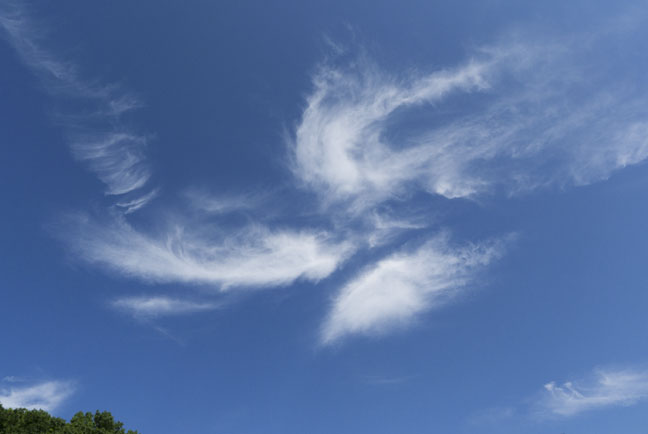

Still adrift, still moving buoyantly forward, I raise my eyes skyward, filled with enchantment.


I have long been inspired by Thoreau’s famous words, “In wildness is the preservation of the world.” I don’t believe it diminishes Thoreau to agree with Mike Houck, director of the Urban Greenspaces Institute in Portland, OR, who updates that for the twenty-first century: “In livable cities is the preservation of the wild.”


After three hours, twelve kayaks pull up on the bank at Riverside Park, below the Urban Ecology Center, which organized our excursion into the urban wilderness.


In a new book called Urban Green, Peter Harnik says “…parks are on the public’s agenda” and “…cities are vying with one another for ‘the best park system’ and the ‘livability crown’….” He mentions New York, Philadelphia, Washington, Seattle, and even Detroit as examples. Why not Milwaukee? Where are Milwaukee’s cheerleaders when it comes to promoting the virtues of our gold medal park system?

Monday, July 18, 2011

Chicago wilderness sustains an abundance of life – human included!


I’ve never been able to get so close to a great blue heron before – not without startling it into rapid retreat. I had been strolling along the bank of the Chicago River in the shade of the dense hardwood forest canopy. I came to a clearing where the slant of the evening light shone like a spotlight on the opposite bank. My attention was drawn by the dramatically splayed skeletal roots of a long dead stump and the symmetry of its mirrored image on the water.


I made my way incautiously towards the point on the bank opposite it to frame a good shot of the stump. I set up my tripod and looked through the viewfinder. Only then did I notice the heron perched on a log off to the side, motionless and perfectly camouflaged against the exposed earth and tangle of roots on the deeply eroded bank.
 

I was stunned. Not by the heron’s presence; I see them frequently along urban rivers. The surprise was that it remained there, so still and poised, focused on its quarry below the surface, after I wandered carelessly into its field of view. An ancient bird, the great blue heron has adapted well to habitats altered by human development. However, unlike some other species, it has not grown accustomed to humans themselves and nearly always flies at the slightest intrusion. 


Perhaps its lack of fear was a result of immaturity. The slate gray of a full-grown heron was still mottled with shades of brown and white, indicating this bird’s relative youth. I waited patiently for it to fly off and provide a picturesque moment. It didn’t. Finally, I waved. It looked up at me and then back at the water. Nearing exasperation, I threw a stick. The rippling water fractured its slender reflection but the bird remained imperturbable. Two men jogging on the bank above yelled back and forth to one another. As their colorful outfits flashed by there was no reaction from the heron.

Finally, for no apparent reason, it slid gracefully off its log and sailed away – just after I’d given up and lifted my camera from the tripod, missing the shot. 


Later, as I rounded a bend and beheld the idyllic scene ahead another heron, larger and grayer, disappeared with more characteristic alacrity, proving the rule that had made my first encounter so surprising.

 
I saw many deer. There are always deer. The whitetail is common enough to be a nuisance. Two does shepherded two tiny dappled fawns as they foraged across the river. Elsewhere, two young bucks with velvet antlers allowed me to get even closer than the heron, without an intervening river. But the self-assured poise of the deer was not surprising; they had little to fear from me and clearly knew it.

I was alone with the animals for quite a while.  But when I came to rail line turned recreational trail that bridged the river I found a refreshingly diverse, steady stream of people using it. I noted two joggers, a cyclist, two young mothers pushing strollers, a dog walker, several solitary amblers, and a trio of shirtless Hispanic teens in thigh-hugging baggy pants and exposed boxers. All were enjoying a tiny green space wedged between Chicago’s urban grid and a curve of the Edens Expressway.


I crossed the old railroad span – staying well away from the edge without any railing! Through the trees ahead I spied a field full of soccer players. I was reminded of Richard Louv’s book, “The Nature Principle,” in which he insists not only that everyone needs the tonic of wildness to maintain wholeness and mental health but also that we who already love the parks need to understand the cultural and preferential differences of others who use parklands and the various needs that they satisfy.


On the other hand, there must be limits to tolerance, including abuse of the natural resources themselves. I wasn’t bothered by the graffiti, since some unwritten but welcome code confined it to the concrete of the bridge abutments. 


At the start of my little excursion I had passed the incongruously placed grate that provides access for one of Chicago’s extensive system of stormwater tunnels. Randomly interspersed around the same meadow were small patches of grass that appeared to have been burned. Returning through the meadow by a different route on my way back to my car the mystery was solved when I came across the sulfurous remains of someone’s impressive arsenal of fireworks.


It is easy to decry the destruction caused by unsupervised explosions. The stormwater tunnel, which stores raw sewage during storms for later treatment, represents ecological impacts of human development on a scale that are much harder to fathom. The urban wilderness, always a place rife with paradox, reveals challenges while it provides opportunities.

"I am glad I shall never be young without wild country to be young in. Of what avail are forty freedoms without a blank spot on the map?" These lines of Aldo Leopold’s are often quoted. I’ve quoted them before myself. Sadly, more and more young people grow up far from the truly wild areas to which Leopold was referring. On the brighter side, more and more people, young and old, like the ones I was seeing here, are realizing the virtues of what Louv calls “nearby nature” and are making efforts to experience the freedoms it provides without leaving the city they live in.


I did a Google map search to find this park, which is called LaBagh Woods, before I came down from Milwaukee. I do that whenever I plan to travel and expect to have a little free time for exploring. When set to “map” mode the green areas on a Google map look remarkably like “blank spots on the map.” Clicking on “satellite” mode reveals the lush textures of woodland canopies that, for so many of us who live in cities, can and must be a substitute for Leopold’s vision.
 

Thursday, May 19, 2011

Richard Louv: "we need a Nature Movement."


Richard Louv, author of Last Child in the Woods and his new book The Nature Principle, was as thoughtful and inspiring as expected when he spoke at the Urban Ecology Center last night to an overflow crowd. He did not read from the book, but from notes he said he wrote on the train down from Minnesota. (He's on a multi-city tour.) I'll give you a few highlights that made an impression on me.

"We need a Nature Movement," he asserted, in contrast to what has long been called the environmental movement. He observed that the latter term has become loaded with political baggage and that "words matter." Nature is a safe, non-threatening word.

When someone in the audience asked "what is the definition of nature he chuckled and said that it's "like the Supreme Court's definition of pornography: you know it when you see it." But after explaining that there is no universally accepted definition, for him nature is "when I am in meaningful kinship with species other than my own."

"A movement will fail if it cannot paint a picture of a world that people want to go to," Louv quoted Martin Luther King, Jr. as saying. Today the environmental movement tends to present a bleak view of the future. Popular culture gives us Blade Runner, Mad Max, and The Road by Cormac McCarthy (read my review). We need a Nature Movement that provides a positive, attractive alternative to the future. "Environmentalism is a pup tent. We need a larger tent," he said.

He wrote The Nature Principle because Last Child in the Woods, being about our children growing up with "nature-deficit disorder," is too limited in scope. He told a story about a woman who came up to him after a reading who grabbed him by the lapels and complained that nature-deficit disorder afflicts adults too! And so he set to work on The Nature Principle in order to address the larger problem.

"Conservation [of natural areas] is not enough. We need to create nature." Yes, he said, we still need work hard to conserve the nature that remains, but with over 50% of the world's population living in cities, the need for nearby nature is more pressing than ever. We have come to the point where two futures are possible for our human species: having no connection with nature or making new cities where it is possible to make that connection. (No surprise: here at Urban Wilderness I believe in making those new cities. In fact, I applaud everything Louv had to say!)

One of Louv's main ideas is to develop a network of Nature Clubs for Families that will help get not just children but whole families out in nature. It's a marvelous idea with a proven track record - and you can check it out on the Children and Nature Network website.

Louv has a laid-back, soft-spoken style and a wry, subtle sense of humor, but the audience was rapt and clearly moved. At several points he asked for questions. One person choked up as she explained that she'd tried for two hard years to create a family nature program similar to the Nature Club with frustrating results. She wondered tearfully how she could make it work. Louv's voice softened even further in sympathy. He said, "It isn't easy, I know." His suggestion was to use the tools available on the website and not to go it alone. I can relate to that. There is always so much resistance and not just the overt oppositional kind. More important are ingrained cultural habits such as the irrational fear of "stranger danger" that keeps parents from allowing their children to roam freely and make up their own rules (as I did when I was young.) We need each others' support!

Thursday, May 12, 2011

Richard Louv to speak at Urban Ecology Center

If you follow Urban Wilderness you may already know this, but Richard Louv wrote the book that I consider the most important concerning our relationship with nature since at least McKibben's The End of Nature and very possibly since Carson's Silent Spring. It is Last Child in the Woods: Saving our Children from Nature Deficit Disorder. If you haven't read it, well, get it asap!

Louv has written a new book, called The Nature Principle: Human Restoration and the End of Nature-Deficit Disorder and he will be giving a talk about it at the Urban Ecology Center next Wednesday, May 18 at 7 pm.

I signed up to attend as soon as I saw the announcement in their online newsletter. (If you're not already a member, what are you waiting for?!)
Here's the announcement:

Author Richard Louv has some important questions for us:
“Does your daily nature intake include running on the treadmill with a forest scene on the TV monitor in front of you? Or perhaps playing WII tennis with your kids – instead of playing outside in a real tennis court?”

In his new book, The Nature Principle, Louv explains how we are increasingly surrounded with new technology and why that means we need contact with nature even more. Next Wednesday, May 18th from 7 – 9pm, we are honored to host Louv as he reads from and discusses The Nature Principle at our Riverside Park location.

Click here to see a video about the new book.

Louv is also the author of Last Child in the Woods, in which he explains a condition he calls “nature-deficit disorder” – the negative effects of a lack of contact with nature. In fact, the second edition of this book includes a description of Louv’s visit to our Riverside Park location!

Along with a group of like-minded folks, Louv also helped to start the Children & Nature Network to help facilitate the increasingly important connection between kids and the outdoors.

Needless to say, we’re thrilled to be hosting him and we hope that you’ll join us for his talk next week! If you’d like to purchase The Nature Principle, Boswell Books will be selling them at the event.

Seating is limited, be sure to reserve a seat by calling the Urban Ecology Center at (414) 964-8505.